
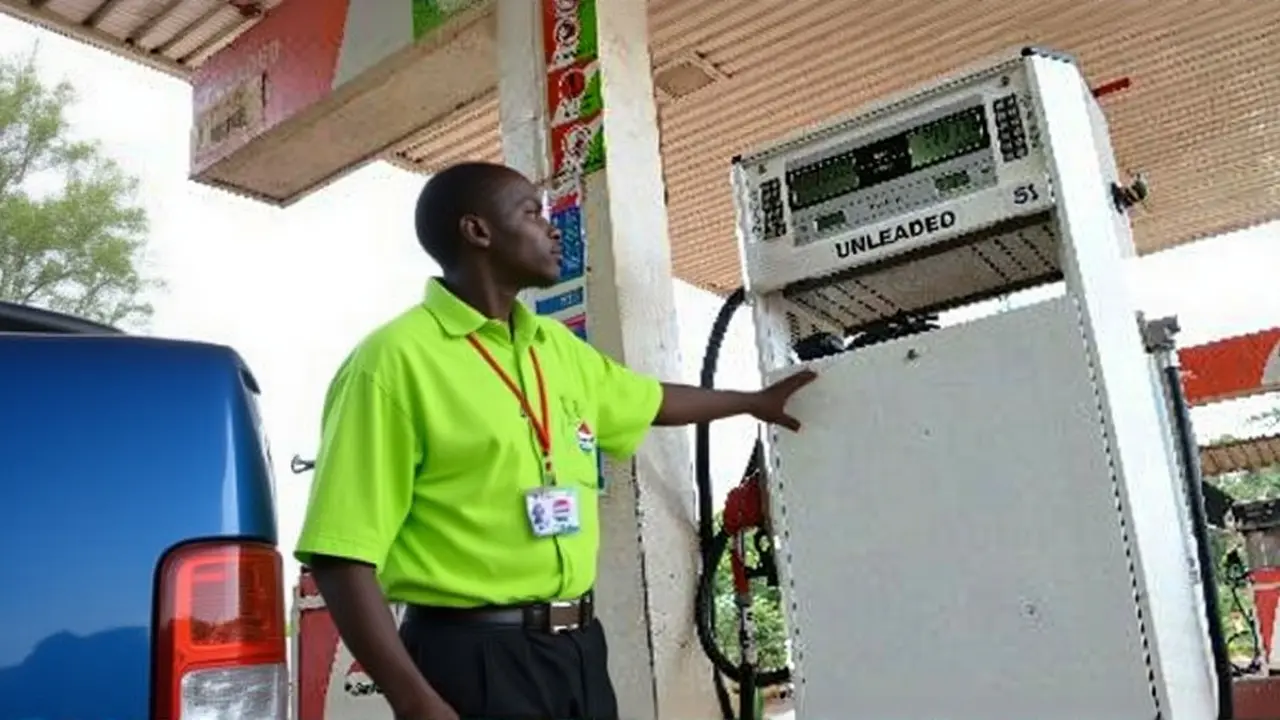
The pumps across Nairobi are running dry, and the long lines stretching out of service stations look less like routine traffic and more like the calm before a storm. Drivers who recently filled their tanks might still think they're lucky, but that luck is evaporating fast. It started with whispers of global shipping delays, and now it has become a full-blown panic. The culprit is the escalating war in the Middle East, specifically the tension between Israel and Iran.
That conflict, which officially sparked on February 28, 2026, has choked off the lifeline Kenya depends on for energy. Nearly every drop of petrol here comes from the Gulf. With the Strait of Hormuz effectively blocked or restricted, the supply chain has snapped. It's not just about scarcity anymore; it's about survival for the nation's economy.
Stations Running Dry Across the Country
The numbers paint a bleak picture. According to the Petroleum Outlets Association of Kenya (POAK), roughly 20% of the country's 3,100 independent retailers are already struggling to dispense product. That sounds manageable until you realize the majority of those struggling outlets are non-franchised shops—small businesses that don't have deep pockets or guaranteed contracts with the big oil majors.
Martin Chomba, Chairman of Petroleum Outlets Association of Kenya (POAK), isn't holding back on his warnings. He told reporters that the situation could escalate dramatically within two weeks. "So far about 20 per cent of some 3,100 retailers are affected," he explained. "In two weeks it could become a total crisis if tensions in the Middle East continue." The logic is simple: once the last ship docks at Mombasa, the clock starts ticking down on the country's reserves. Industry insiders suggest that stock lasts about 21 days at current consumption rates. After that? Total blackout.
Government Freezes Prices Amidst Rising Costs
Here's the twist that makes things worse. On March 14, 2026, the Energy and Petroleum Regulatory Authority (EPRA) announced a 30-day price freeze. On paper, freezing retail pump prices sounds good for consumers who hate paying more at the counter. But it's created a perverse incentive. Dealers know that international crude costs are soaring, even if local prices are frozen.
Facing the prospect of selling high-cost fuel at low prices, many marketers are choosing to hide their stock instead of selling it. Hoarding is spreading faster than the shortage itself. Daniel Kiptoo Bargoria, Director General of Energy and Petroleum Regulatory Authority (EPRA), insists the country has "sufficient stocks." Yet, standing at a busy junction in the capital where three taxis are waiting behind each other for five minutes just to get a chance at a nozzle, his confidence feels disconnected from the ground reality. The disconnect is dangerous when you're driving an entire economy.
The Tax Burden Driving Up Bills
Beyond the supply shock, there's the domestic tax structure to consider. Why does a liter of petrol cost so much even when global crude dropped below $55 a barrel in 2025? It turns out, Kenyan drivers are paying almost half the price in taxes alone. At current pump prices near 170 shillings per liter, duties take a huge bite.
Karu Member of Parliament Indoro argues that removing the seven-shilling levy and the 8% value-added tax would immediately lower costs. Currently, VAT contributes roughly 25 shillings per liter. The levy itself generates 32 billion shillings annually through advanced collection. Critics say these levies make us vulnerable to external shocks. We import 75% of our refined fuel from the Middle East, meaning any hiccup there hits our wallets directly. When the global price was high, taxes felt manageable. Now that supply is threatened, that tax burden feels suffocating.

African Nations Face Similar Shocks
This isn't an isolated incident. The crisis is rippling across the continent. East and Southern Africa are particularly exposed. In South Africa, the National Treasury admitted they have limited capacity to shield consumers from rising prices. Crude oil costs have surged more than 40% recently, topping $100 per barrel in recent trading sessions. Even neighbors like Ethiopia have urged citizens to curb consumption.
The geopolitical fallout is hitting hard. The war disrupted approximately 20% of all petroleum and LNG shipments globally. For nations reliant on the Gulf, that number is catastrophic. Consumers might feel the pinch most, but transport costs, food prices, and manufacturing are all linked to fuel availability. If the fuel runs out, everything else grinds to a halt. Motorists in Nairobi warn that if shortages persist, they may simply stop driving proactively, draining the market further. It's a self-fulfilling prophecy of panic that regulators haven't quite cracked yet.
Frequently Asked Questions
Why are fuel prices high despite lower global oil costs?
Even when global crude drops, Kenyan pump prices remain high due to a complex tax structure. Taxes and levies account for nearly 50% of the retail cost, including an 8% VAT and a seven-shilling levy. These fixed charges do not decrease when international barrel prices fall, keeping local costs elevated regardless of global trends.
How long will current fuel stocks last in Kenya?
Industry estimates suggest current reserves can sustain supply for approximately 21 days. With daily consumption reaching 5.5 million liters of petrol and 7 million liters of diesel, the timeline is tight. Once the last shipment arrives at Mombasa, retailers warn that shortages could become critical within three weeks.
Is the government taking action to manage the crisis?
Yes, the Energy and Petroleum Regulatory Authority froze retail pump prices for 30 days on March 14, 2026. While this aims to protect consumers, industry experts warn it may encourage dealers to hoard fuel rather than sell it at potentially loss-making prices, inadvertently worsening the shortage.
How does the Middle East conflict affect Kenyan fuel supply?
Kenya relies entirely on government-to-government imports from Gulf producers. The ongoing conflict between Israel and Iran has disrupted approximately 20% of global petroleum shipments through the Strait of Hormuz. Since Kenya imports most refined fuel from this region, any blockade or disruption directly impacts national availability.

10 Comments
This is basically what happens when you rely on imports instead of local production resources :). They want to tell us the shortage is temporary but the numbers dont lie. Global trade routes are cut off and everyone acts surprised like it is a new thing to happen. The prices are frozen which means suppliers hide everything in the dark to make money elsewhere. Nairobi traffic will turn into a parking lot soon enough if nothing changes fast. It feels like a massive gamble with national stability on the line every single day.
/p>Freezing prices while costs skyrocket is the perfect recipe for market collapse lol. The logic here is completely flawed and the regulators seem to have missed that basic lesson entirely. Hoarding is the natural result of artificial caps on essential commodities. People forget how economics works until their tank hits empty.
/p>Its really sad to see peple struggling for basic energy needs right now. The goverment says stock is fine but we all know the truth on the ground. Prices might stay same but finding fuel is getting harder evryday. Hopes for peace returning soon before things get worse. We need better plans for local energy source alternatives.
/p>There are deeper forces at play controlling the flow of oil through strategic chokepoints deliberately. The conflict narrative distracts from the true agenda of resource redistribution among elites. What we see on the news is only a fraction of the geopolitical chess game happening behind closed doors. Trusting the official reports ignores the shadow economy manipulating reserves globally. This feels orchestrated rather than accidental in its timing and intensity.
/p>The macroeconomic implications of such a supply shock are profound and multifaceted in scope. First consider the liquidity constraints faced by small independent retailers who operate on thin margins. Their inability to hedge against volatility exposes the fragility of the downstream distribution network significantly. Furthermore the regulatory intervention aimed at price stability creates significant moral hazard problems within the supply chain. Marketers facing negative arbitrage will naturally opt for inventory retention rather than immediate sale volumes. This behavior leads to a classic case of government-induced scarcity despite available reserves physically existing. The tax incidence structure compounds the issue by adding rigid fixed costs to a volatile commodity base. Value added tax mechanisms become counter-cyclical when input costs spiral upward rapidly without proportional pass-through ability. Strategic reserve policies in neighboring nations also influence cross-border arbitrage opportunities significantly. Regional integration efforts falter when energy security priorities diverge sharply between partner states. Ultimately the transmission mechanism from global crude fluctuations to local pump prices remains broken. Structural reforms in taxation and subsidy frameworks require urgent legislative attention from policymakers. Without addressing these fundamental distortions relief measures remain palliative rather than curative in nature. Market confidence erodes further as uncertainty regarding duration increases substantially each passing week. Stakeholders need to understand the systemic risk involved here fully.
/p>I feel so much empathy for the families driving miles just to find a working station today.
/p>war affects us everywhere even if we think borders protect us from economic pain sometimes it takes longer to realize the damage done locally we just keep hoping for the best but reality hits hard eventually
/p>We can still optimize our consumption patterns to survive this difficult period effectively. Switching to public transport where possible helps reduce individual demand pressure on the system. Small savings add up quickly across the community if everyone tries their best to help. Keep morale high and support local vendors during these tough times ahead.
/p>Reflecting on the interconnectedness of global systems reveals how fragile our daily comforts truly are in practice. We must find balance between economic protectionism and necessary import dependency strategies. Silence and patience may offer better insights than panic buying during turbulent times.
/p>You ignore the fact that VAT contribution is legally mandated regardless of global trends. The levy generates revenue for state coffers independent of barrel pricing fluctuations. Experts agree that removing fiscal obligations disrupts budget planning significantly. Knowledge of the regulatory framework prevents misinformation from spreading in these discussions.
/p>