
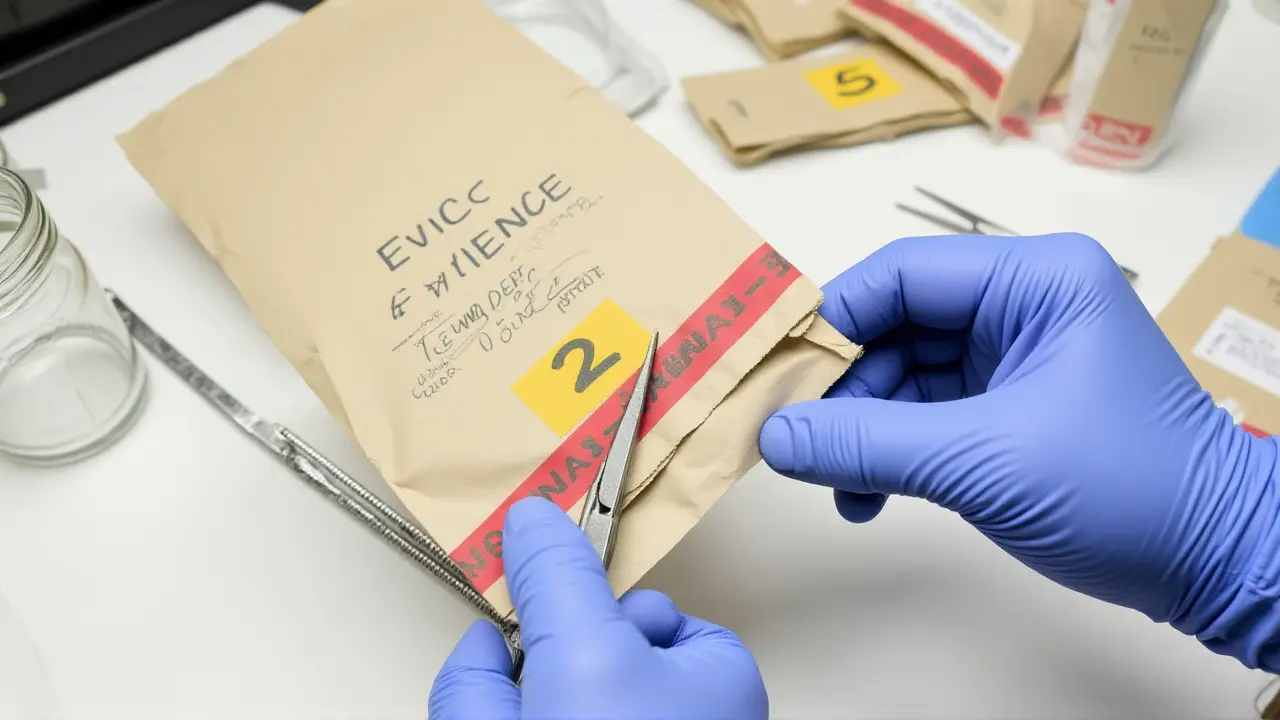
When a sudden death occurs in rural south Alabama, the clock starts ticking immediately. For families in eight specific counties, help arrives not from a distant city lab, but from a specialized van on their doorstep. The Alabama Department of Forensic Sciences operates a unique Mobile Medical Facility designed to bring critical forensic services directly to communities that might otherwise wait days for answers.
This isn't just about logistics; it’s about dignity and speed. By deploying resources directly to Mobile County, Baldwin County, and six other southern jurisdictions, the state ensures that death investigations begin without delay. But how exactly does this mobile unit work, and what happens to the evidence collected?
How the Mobile Facility Operates
The setup is surprisingly straightforward but highly regulated. The mobile unit provides two core services: Death Investigation and Forensic Pathology. Think of it as a field office for medical examiners. When a case arises in one of the designated counties—Conecuh County, Clarke County, Choctaw County, Monroe County, Escambia County, or Washington County—investigators can process the scene and conduct initial examinations on-site or at local facilities.
Here’s the catch, though: you can’t just drop off random evidence at the mobile unit. The facility strictly accepts physical evidence only if it is submitted alongside a decedent. If you have a piece of clothing or a weapon unrelated to a body currently being processed by the unit, it won’t be accepted there. This rule prevents contamination and keeps the chain of custody tight.
Where Does the Evidence Go?
If the mobile unit doesn’t take everything, where does it go? The Alabama Department of Forensic Sciences has a clear division of labor across its state-wide network.
- Fire Debris and Toxicology: These samples must be sent to the Birmingham Laboratory. Located in the state capital, this facility handles chemical analysis and arson-related evidence.
- Biology, Drugs, and Firearms: Evidence requiring DNA testing, drug chemistry analysis, or firearm and tool mark examination goes to the Mobile Regional Lab.
This split system ensures that specialists handle complex tasks. While the mobile team focuses on the immediate needs of the death investigation, the larger labs in Birmingham and Mobile provide the deep-dive scientific analysis required for court cases.
A National Context for Forensic Services
Alabama’s approach mirrors broader trends in U.S. forensic science, where regionalization and specialization are key. In Harris County, Texas, the Institute of Forensic Sciences investigates sudden and unexpected deaths, focusing heavily on professional education. They established the TIFS Conference in 2010 to train partner agencies, highlighting the importance of standardized protocols.
Similarly, in Indiana, the Indiana University School of Medicine runs a forensic pathology fellowship that serves the Indianapolis metropolitan area. This program does double duty: it trains future board-certified pathologists while providing essential services to the public. It’s a model that combines academic rigor with community service.
In Wisconsin, the Regional Forensic Science Center in Marathon County emphasizes the family aspect of autopsies. Their pathologists note that identifying undiagnosed conditions can offer families "a deeper understanding of their medical history." This human element is often overlooked in discussions about crime scenes, but it’s crucial for closure.
Why This Matters Now
With backlogs plaguing many forensic labs nationwide, models like Alabama’s mobile facility become even more critical. By decentralizing the initial phase of death investigations, states can reduce pressure on central labs. Outreach efforts, such as those during National Forensic Science Week, aim to demystify these processes and build public trust. As seen in events like the Houston Venom Conference, professional development remains a priority for keeping these systems efficient and accurate.
Frequently Asked Questions
Which counties does the Alabama Mobile Medical Facility serve?
The facility serves eight counties in south Alabama: Mobile, Baldwin, Conecuh, Clarke, Choctaw, Monroe, Escambia, and Washington. These areas benefit from direct access to death investigation and forensic pathology services without needing to transport bodies long distances initially.
Can I submit physical evidence like drugs or fire debris to the mobile unit?
No. The Mobile Medical Facility only accepts evidence submitted along with a decedent. For standalone evidence, you must send fire debris and toxicology samples to the Birmingham Laboratory, and biology, drug chemistry, and firearm evidence to the Mobile Regional Lab.
What is the purpose of the TIFS Conference in Texas?
Established in 2010 by the Harris County Institute of Forensic Sciences, the TIFS Conference provides educational topics and training for agencies and jurisdictions that collaborate with the institute. It aims to standardize practices and improve forensic outcomes through professional development.
How do forensic fellowships help the public?
Programs like the one at Indiana University School of Medicine serve a dual purpose. They train physicians for board certification in forensic pathology while simultaneously providing essential forensic services to the Indianapolis metropolitan area, ensuring high-quality care and investigation.
