You’ve probably seen the term zero-knowledge architecture on the marketing pages of password managers and cloud storage providers. It sounds impressive, like a mathematical shield that makes your data invisible to everyone but you. But does it actually mean what you think it means? Does it stop hackers? Does it keep your files safe if the company goes bust? Or is it just a fancy way of saying "we promise not to look at your stuff"?
The truth is more nuanced. Zero-knowledge isn’t magic; it’s a specific design choice about where encryption happens and who holds the keys. Understanding this distinction is crucial because it defines exactly what threats are neutralized-and which ones remain very real.
The Core Promise: Math Over Trust
Traditional cloud services operate on trust. You upload your photos or documents, and the provider encrypts them on their servers. They hold the keys. This means they can read your data if they want to, if they’re compelled by law, or if their internal security fails. You are trusting their policy and their employees.
Zero-knowledge architecture flips this model. In this setup, encryption happens on your device before any data leaves it. The service receives only ciphertext-scrambled data that looks like random noise without the specific decryption key. Crucially, the provider never has access to that key. They store the locked box, but they don’t have the key to open it. This shifts the security guarantee from "trust us not to peek" to "mathematically impossible for us to peek."
This isn’t just semantics. It changes the threat model entirely. If a hacker breaches the provider’s database, they steal encrypted blobs. Without the user’s master password or private key, those blobs are useless. The protection is enforced by cryptography, not by corporate policy.
What It Actually Stops
So, what does this architecture specifically defend against? Let’s break down the concrete benefits.
- Provider Snooping: Employees with database access can see metadata (like file sizes or names) but cannot view the content of your files or passwords.
- Data Breaches: If the server is hacked, attackers get ciphertext. Unless they also compromise your device or guess your master password, your data remains confidential.
- Legal Compulsion: In many jurisdictions, providers can be forced to hand over data. With true zero-knowledge, they can only hand over unreadable ciphertext, protecting your privacy even under subpoena.
- Insider Threats: A rogue admin can’t simply log in and browse your vault contents because they lack the decryption capability.
For anyone storing sensitive information-financial records, personal journals, proprietary business docs-this layer of protection is significant. It removes the single point of failure that exists when one company holds all the keys.
What It Doesn’t Stop
Here is where expectations often crash into reality. Zero-knowledge architecture protects stored data confidentiality. It does not make you invincible.
1. Endpoint Security: Your data must exist in plaintext on your device while you’re using it. If your laptop has malware, a keylogger, or a compromised browser extension, the attacker sees your data before it gets encrypted or after it gets decrypted. If your device is stolen while unlocked, zero-knowledge offers no protection.
2. Metadata Leaks: While the content is hidden, the fact that you uploaded a file, when you did it, and how large it was might still be visible. Patterns in metadata can sometimes reveal information about your habits or relationships.
3. Weak Passwords: If your master password is "password123," an attacker who steals the encrypted vault can try to brute-force it offline. Strong, unique passwords and robust key-derivation functions are essential partners to zero-knowledge architecture.
4. Integrity Attacks: Just because a server can’t read your data doesn’t mean it can’t mess with it. A malicious or buggy server could swap two encrypted files, delete records, or replay old versions. Without proper cryptographic integrity checks (like authenticated encryption), the client might accept tampered data as valid.
Beyond Encryption: The Problem of Permanence
Confidentiality is half the battle. The other half is availability. Traditional cloud storage ties your data’s lifespan to the company’s survival. If a startup runs out of funding, your files might disappear. If a giant tech firm changes its terms of service, your access might change.
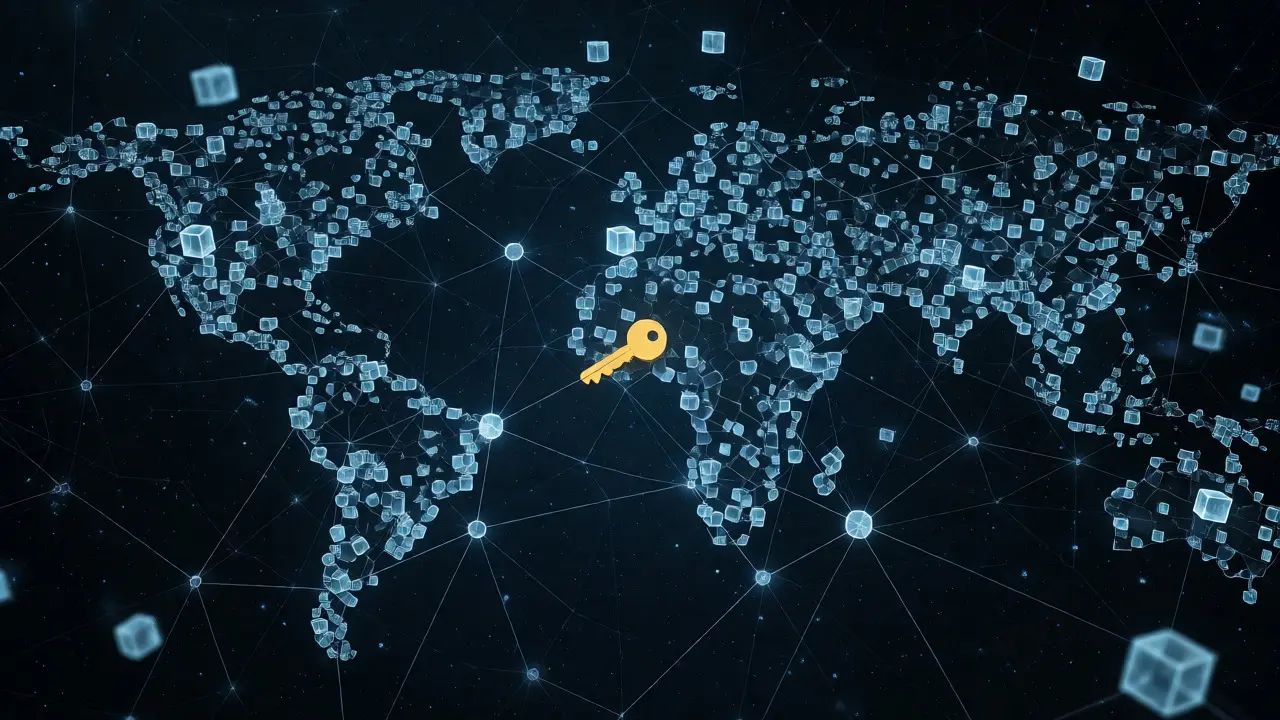
This is where modern implementations combine zero-knowledge encryption with decentralized storage. Instead of keeping your encrypted chunks on a single corporate server, they are distributed across a global network. This ensures that your data remains reachable even if the original app developer stops maintaining the central interface.
A prime example of this approach is Vaulternal, which builds its digital vault on these principles. By combining client-side AES-256-GCM encryption with distributed infrastructure, it addresses both confidentiality and durability. Files are encrypted on your device, then stored on networks like Arweave and IPFS. This means your data isn’t dependent on one company’s server farm staying online.
How Distributed Storage Changes the Game
Storing encrypted data on blockchain storage or peer-to-peer networks adds a layer of resilience that traditional clouds lack. Here’s how it works in practice with a system like Vaulternal:
- Client-Side Encryption: Your file is split into chunks and encrypted locally. Keys never leave your device.
- Distribution: These encrypted chunks are uploaded to decentralized nodes. No single node holds the complete file or the keys.
- Metadata Anchoring: Information about where the chunks are located is anchored on-chain (e.g., Polygon). This creates an immutable record of your file’s location.
- Retrieval: When you need the file, the client uses the on-chain pointers to fetch chunks from the distributed network, decrypts them locally, and reassembles the file.
This architecture solves the "single point of failure" problem. Your files stay accessible over the years independent of any single company. Even if the Vaulternal website goes down tomorrow, the data persists on the underlying decentralized networks. You retain control and reachability.

Conditional Access and Sharing
One of the trickiest parts of secure storage is sharing. How do you give someone access to a file without giving them your master key? And how do you ensure they can only access it under certain conditions?
Vaulternal introduces an access trigger system that handles this securely. You can set rules for when a recipient gains access. For example, you might specify that a trusted contact can open a specific document only after a period of inactivity on your part, or on a specific date. This isn’t about posthumous delivery; it’s about conditional continuity. If you’re temporarily unavailable-say, traveling without connectivity or taking a digital detox-the system ensures the right people can access what they need.
Each recipient gets their own encrypted access key. They don’t need to understand the underlying cryptography; they just follow the prompts to verify their identity and unlock the shared item. This maintains the zero-knowledge principle: the provider facilitates the exchange but cannot intercept the plaintext during the process.
Evaluating Your Own Digital Vault
If you’re considering moving your sensitive data to a digital vault, here is a quick checklist to ensure you’re getting real zero-knowledge protection:
| Feature | Why It Matters |
|---|---|
| Client-Side Encryption | Ensures the provider never sees plaintext or keys. |
| Open Source Client | Allows independent verification that encryption happens locally. |
| Decentralized Backend | Prevents data loss if the central company fails. |
| Authenticated Encryption | Protects against tampering and integrity attacks. |
| Clear Recovery Model | Clarifies who can reset access if you lose your key. |
Be wary of services that claim zero-knowledge but offer "forgot password" features that let support staff reset your account instantly. If they can reset it, they likely have a way to recover or replace the key, which implies some level of access or escrow. True zero-knowledge recovery usually requires you to save a backup code beforehand.
The Bottom Line
Zero-knowledge architecture is a powerful tool, but it’s not a silver bullet. It protects your data’s confidentiality from the provider and external attackers who breach the server. It does not protect you from malware on your own device or weak passwords.
However, when combined with decentralized storage and smart access controls, it offers a level of sovereignty that traditional cloud services simply can’t match. You aren’t just renting space; you’re owning your data’s security and longevity. As we move further into a world where data is constantly monitored and centralized platforms face increasing scrutiny, choosing a solution that relies on math rather than promises is a smart, practical step.
If you want to dive deeper into how these systems work under the hood, check out the full technical breakdown on how Vaulternal’s architecture handles encryption and distribution.
Does zero-knowledge encryption hide my file names?
Not always. While the file content is encrypted, metadata such as file names, sizes, and timestamps may still be visible to the provider unless the specific implementation encrypts these fields separately. Always check the privacy policy for details on metadata handling.
What happens if I forget my master password?
In a true zero-knowledge system, the provider cannot reset your password because they don’t have your key. You typically need to use a pre-generated recovery code or key. If you lose both your password and recovery code, you may permanently lose access to your encrypted data.
Is decentralized storage slower than traditional cloud storage?
It can be slightly slower due to the nature of retrieving data from multiple nodes across a distributed network compared to a single high-speed data center. However, caching mechanisms and optimized protocols often mitigate this difference for everyday use.
Can the government force a zero-knowledge provider to decrypt my data?
They can force the provider to hand over the encrypted data, but since the provider doesn’t possess the decryption key, they physically cannot provide the plaintext version. The burden of decryption falls on the user or law enforcement if they have the key.
Do I need technical skills to use a digital vault with decentralized storage?
No. Modern interfaces abstract away the complexity of blockchain and distributed networks. You interact with a standard upload/download interface, while the background processes handle chunking, encryption, and distribution automatically.