
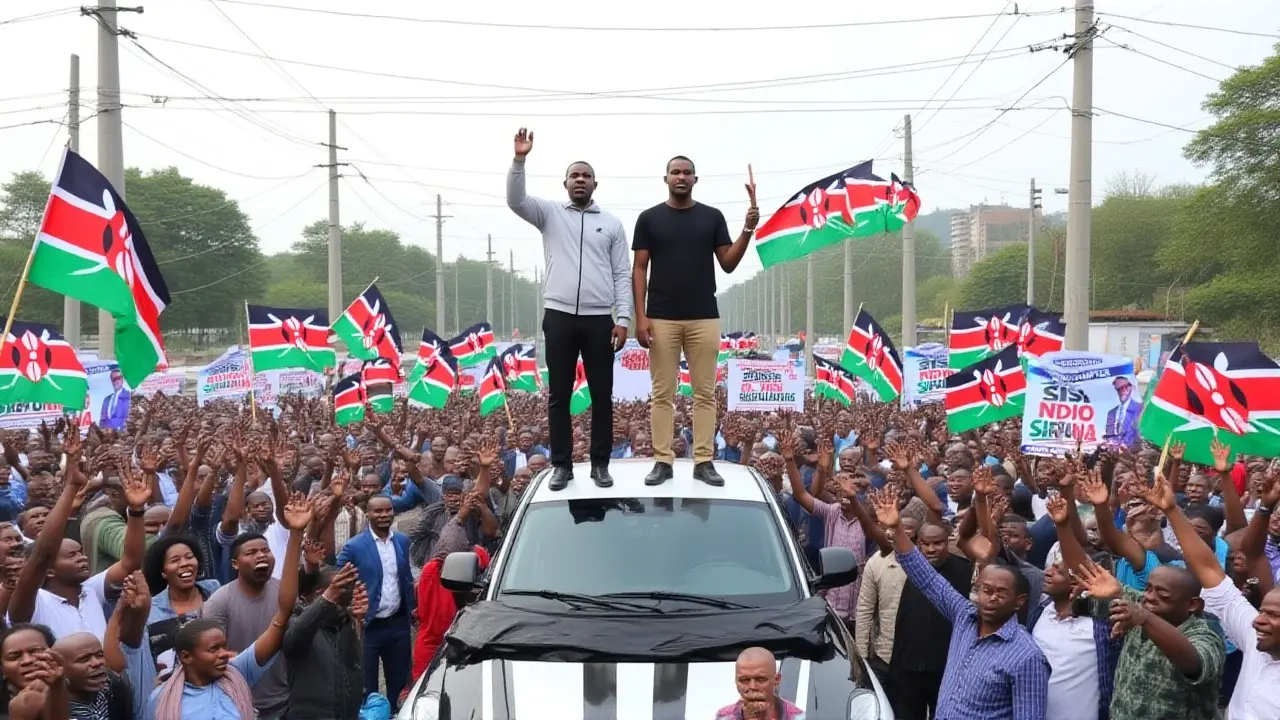
It started with a church service and ended with a call to make the country "ungovernable." James Orengo, the Governor of Siaya County, has announced a series of aggressive nationwide protests scheduled for June 2026. Speaking in Nakuru, Orengo signaled that the Linda Mwananchi faction of the Orange Democratic Movement (ODM) is preparing for a massive mobilization to commemorate the anniversary of the Gen Z-led demonstrations from 2024. This isn't just a memorial; it's a strategic political move aimed at honoring those who lost their lives while simultaneously railing against the current economic squeeze, specifically the rising cost of fuel.
Here's the thing: there's already some confusion about the exact calendar dates. While some reports suggest the action will hit on June 25, 26, and 27, major outlets like Nation Africa have confirmed the target is June 24, 25, and 26, 2026. The timing is purely symbolic, designed to mirror the chaos and passion of the June 2024 protests that shook the nation's foundations. Turns out, the opposition isn't just looking back—they're using the memory of fallen youth to fuel a fire that's clearly intended to burn right up until the 2027 general elections.
- Proposed Dates: June 24-26, 2026 (with some reports citing June 25-27).
- Primary Goal: Honoring Gen Z victims of the June 2024 protests and protesting fuel price hikes.
- Key Figures: Led by James Orengo and backed by senior ODM leaders.
- Location of Announcement: PAG Kivumbini Church and Mazembe Grounds, Nakuru.
- Political Context: Part of the broader "Linda Mwananchi" struggle for political liberation.
A Sunday Service with a Political Edge
The announcement didn't happen in a press room, but rather during a church service at the PAG Kivumbini Church in Nakuru County. It's a classic Kenyan political move—blending faith with grassroots mobilization. Orengo didn't mince words, telling the congregants that "June 25 is coming" and reminding them of the blood spilled by Gen Z protesters two years prior. He framed the upcoming action as a necessary struggle to "liberate the country," essentially telling his supporters that the only way to be heard is to disrupt the status quo entirely.
But wait, it wasn't just Orengo on the soapbox. He was flanked by a heavy-hitting delegation of the Linda Mwananchi wing. Among them was Edwin Sifuna, the Senator for Nairobi and ODM Secretary General, alongside Godfrey Osotsi (Vihiga Senator), Babu Owino (Embakasi East MP), and Caleb Amisi (Saboti MP). This group represents the more vocal, militant edge of the opposition, and their presence suggests that this isn't a fringe plan—it's a coordinated effort.
Internal Strife Amidst External Unity
Following the church service, the group moved to Mazembe grounds in Nakuru West for a full-blown political rally. Interestingly, while the public face was one of defiance against the state, reports from KTN News suggest that the internal dynamics within the ODM are far from stable. The "Linda Mwananchi" (Protect the Citizen) faction is essentially carving out its own identity within the party, and the friction between different power centers in the party was reportedly visible even during the event.
This internal tug-of-war is an important detail. If the ODM is split, the effectiveness of a nationwide protest could be diluted. However, by anchoring the protest to the "Gen Z" legacy, the Linda Mwananchi faction is attempting to bypass party bureaucracy and appeal directly to the youth—the very demographic that proved it could paralyze the city of Nairobi in 2024.
The Economic Trigger: Why Now?
While the anniversary of the 2024 protests provides the emotional hook, the immediate catalyst is the wallet. The faction is explicitly linking the 2026 protests to the recent spike in fuel prices. In Kenya, fuel prices are more than just a cost of doing business; they are a political barometer. When petrol prices climb, transport costs soar, food becomes more expensive, and public anger reaches a boiling point.
By combining a human rights narrative (the Gen Z victims) with an economic grievance (fuel prices), Orengo is building a broad coalition. It's a strategy designed to move beyond purely political supporters and bring in the "ordinary" Kenyan who is simply struggling to get by. The goal is a perfect storm: a mix of moral outrage and economic desperation.
Looking Ahead to 2027
Let's be real—this is about the 2027 elections. By calling for the country to be made "ungovernable," the Linda Mwananchi faction is trying to establish itself as the true vanguard of the people's struggle. They are essentially testing the waters to see how much the public is willing to risk and how the state will respond. Surprisingly, Orengo dismissed any fears of state reprisals, though history suggests that mass actions in Kenya rarely end without some form of confrontation.
The ripple effects of this announcement are already being felt. Political temperatures in Kenya are rising, and the government now faces a dilemma: ignore the threat and risk being blindsided, or crack down early and risk creating more martyrs for the opposition's cause. The next few months will likely see an intensification of this rhetoric as the June 2026 deadline approaches.
Frequently Asked Questions
What exactly is the Linda Mwananchi faction?
The Linda Mwananchi (which translates to "Protect the Citizen") is a specific faction within the Orange Democratic Movement (ODM) party. It is led by prominent figures like James Orengo and focuses on more aggressive grassroots mobilization and social justice issues, often positioning itself as the champion of the common citizen against government excesses.
Why are the protests happening in June 2026?
The dates are chosen to commemorate the anniversary of the Gen Z-led protests that occurred in June 2024. These earlier protests were a watershed moment in Kenyan politics, characterized by youth-led movements against government policies. By scheduling the 2026 protests then, the faction aims to honor those who were killed during the 2024 unrest.
What are the primary grievances being cited?
The protests are twofold. First, they are a memorial for the victims of the 2024 demonstrations. Second, they are a direct protest against the current economic climate, specifically the increase in fuel prices which has driven up the cost of living for millions of Kenyans.
Who are the key leaders involved in this movement?
The movement is spearheaded by Siaya Governor James Orengo. Other key figures include Nairobi Senator Edwin Sifuna, Vihiga Senator Godfrey Osotsi, Embakasi East MP Babu Owino, and Saboti MP Caleb Amisi. This coalition represents a mix of legislative power and popular appeal within the ODM structure.
Is there a consensus on the protest dates?
There is some discrepancy in reports. Nation Africa and other sources point to June 24, 25, and 26, 2026. However, some outlets like Eastleigh Voice reported the dates as June 25, 26, and 27. Despite this, the core intent remains a three-day nationwide action during the final week of June.

22 Comments
looks like a classic power play to leverage youth energy for electoral gains in 2027
/p>absolutey disgusting how they use dead kids for poltical games its a moral failur on every level
/p>yeah right like anyone thinks a church service makes this legit its just more of the same old trash
/p>lmao imagine thinking these /p>
lmao imagine thinking these guys actually care about fuel prices they just want the seat
/p>The structural dialectic here is fascinating. We are seeing a synthesis of populist mobilization and systemic disruption, where the hegemony of the current state is challenged not through legislative reform, but through the visceral application of collective memory and socio-economic grievances. This is a textbook case of an extra-parliamentary strategy designed to catalyze a regime shift by exploiting the precariousness of the proletariat's economic stability. The fuel price hike serves as the materialist catalyst, while the Gen Z martyrs provide the symbolic capital necessary to legitimize the chaos. It is an attempt to destabilize the ontological security of the ruling class by creating a state of permanent ungovernability. The temporal alignment with the 2024 protests creates a cyclical narrative of resistance that transcends mere policy disagreement and enters the realm of revolutionary mythology. Essentially, the opposition is attempting to weaponize nostalgia and anger to bypass the traditional bureaucratic channels of the ODM party and establish a direct, unmediated connection with the youth demographic. This paradigm shift in political communication indicates a move toward a more volatile and unpredictable form of civic engagement. By framing the struggle as a liberation movement, they are shifting the discourse from reform to total systemic overhaul. The internal friction within the party only highlights the centrifugal forces at play within the coalition. In the end, the efficacy of this strategy depends on whether the economic desperation outweighs the fear of state violence.
/p>This whole thing feels like a trap :(/p>
This whole thing feels like a trap :( Why is it always the politicians who decide when the people should be angry? It's like they're scheduling the revolution on a Google Calendar. It's honestly depressing to see genuine loss being used as a strategic political move. They talk about liberating the country but they're just liberating their own path to power. I feel for the families of the victims who have to see their children's names used in a campaign strategy. It's just cruel. Just plain cruel!
/p>I really hope this leads to a positive shift for everyone 🌸 The synergy between the youth and the established leaders could be a real game-changer if the focus stays on the people and not just the party politics! Let's keep the energy high and the intentions pure ✨
/p>Fuel prices are genuinely out of control ⛽️📉 It's impossible to run a business or even commute to work with these hikes. This is the real issue here 💯
/p>Pretty wild to see the blend of church and politics in action here. It's such a specific vibe for those who don't know how things work in Kenya
/p>It is most unfortunate that such volatility is being encouraged in the public sphere
/p>Maybe there is a way to reach a middle ground without making things ungovernable? ❤️
/p>the dates r all over the place in the news reports lol
/p>I believe we should remain calm and observe the situation carefully
/p>Just watching this unfold from the sidelines. Interesting times.
/p>Let's gooo! Time to show them the power of the people! 🚀🔥 Keep the momentum building!
/p>The economic side of this is what will actually bring people out. Fuel is everything :)
/p>The government can't just keep ignoring the struggle of the ordinary citizen! This is the only way to get their attention!
/p>From a policy perspective, the fuel price index is indeed a critical indicator of inflationary pressure within the Kenyan economy, and it is quite logical that the opposition would pivot their strategy to incorporate this specific grievance because it creates a cross-class alliance that transcends the typical youth-led activism of the 2024 protests. By aligning the moral imperative of honoring the victims with the material necessity of affordable energy, the Linda Mwananchi faction is essentially constructing a multi-layered coalition that is much harder for the state to dismiss as merely 'disruptive youth.' Furthermore, the choice of Nakuru for these announcements is strategic, as it allows them to engage with a different regional demographic than the urban Nairobi center, thereby diversifying their support base before the 2027 elections. It will be interesting to see if the internal friction within the ODM is resolved or if it leads to a further splintering of the opposition, which could potentially weaken the overall impact of the June 2026 mobilization effort.
/p>Absolute madness. The drama in this country never ends
/p>It is utterly pathetic that some believe this circus of a political movement constitutes actual leadership. The lack of intellectual rigor in these 'mobilizations' is staggering. One does not simply 'make a country ungovernable' and expect a prosperous outcome; it is the rhetoric of the desperate and the unskilled.
/p>